
Cuisine
Meal Periods
Dining Format
Price Range
$45 - $98
Cuisine
Meal Periods
Dining Format
Price Range
$45 - $98
EXPERIENCE
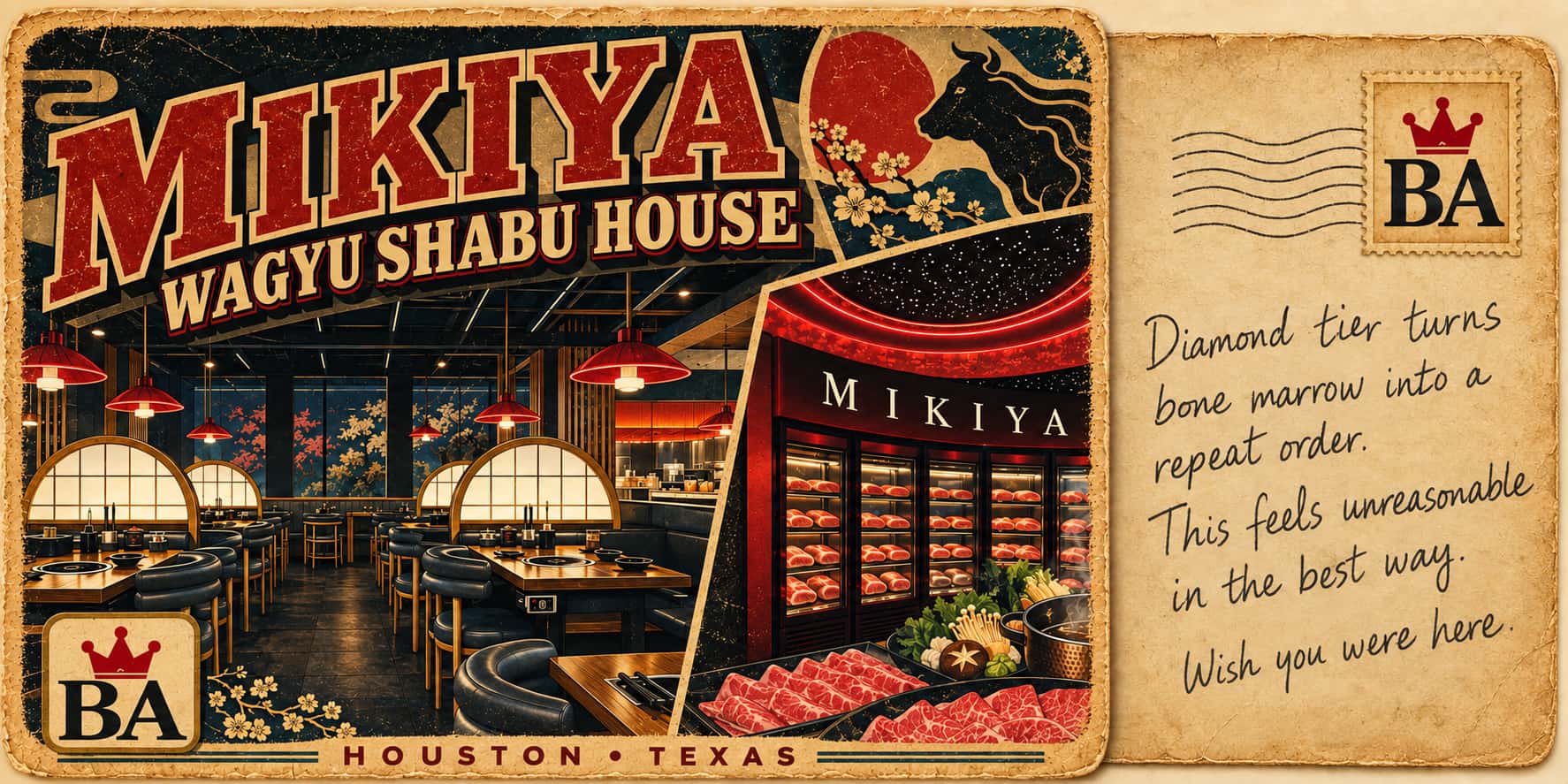
Mikiya Wagyu Shabu House takes all-you-can-eat in a direction closer to a steakhouse tasting than a conventional hot-pot buffet. The Houston dining room is dark, polished and dramatic, with plush seating, warm lighting, Japanese-inspired geometric lines and a visible meat cooler that puts the marbling on display before the meal begins. The room makes the central promise clear: abundance matters here, but the object of that abundance is premium beef.
The meal runs for 90 minutes, and the whole table chooses the same pricing tier. Plates of raw, paper-thin wagyu arrive while a divided pot bubbles in the center. That raw presentation is the point of shabu-shabu, not a shortcut around cooking. Each slice is swished through broth for seconds, so the meal develops a rhythm of order, cook, dip, eat and repeat. First-timers quickly learn that the most expensive cuts often need the least time in the pot.
The four tiers turn dinner into a comparison exercise. Basic stays with American wagyu; Silver adds premium Australian wagyu and a one-per-person taste of Japanese A5; Gold opens more of the Japanese A5 and full-blood M9+ Australian range while keeping the A5 chuck ribeye limited; Diamond removes most of those ceilings, including unlimited specialty dishes and the seafood platter. It is genuinely all-you-can-eat wagyu, but not every premium item is unlimited at every level. The 90-minute clock is the practical boundaries around the word unlimited.
That structure is what makes Mikiya interesting beyond novelty. The meal can become pure excess, but it is more rewarding as a progression through different origins, marbling levels, broths and textures. The setting has the special-occasion feel of a splurge dinner, yet the cooking remains hands-on and social. Everyone at the table becomes part of the preparation.

FOOD
Wagyu is the organizing principle, with American beef at the foundation, Australian wagyu above it and Japanese A5 at the upper tiers. A5 combines the top yield grade with the top quality grade in Japan’s beef grading system, while M9+ signals very high marbling on the Australian scale. The cuts arrive extremely thin, which is why the trays can look almost sashimi-like. Most of that beef is meant for the pot, not for eating raw.
Shabu-shabu rewards patience. Chuck ribeye, brisket and shoulder need only enough time in bubbling broth to lose their raw surface and warm through. Chuck ribeye brings the richest steak-like balance of meat and fat, brisket runs softer and fattier, and shoulder offers a slightly firmer bite. Gold and Diamond add full-blood M9+ Australian cuts, while Diamond makes the complete Japanese A5 trio part of the repeatable rotation.
The broth changes the same meat dramatically. Sukiyaki leans sweet and savory; house broth is gentler and comes with ponzu; spicy miso adds fermented depth; tomato brings acidity. Newer spicy mala and tom yum choices push the meal toward numbing chile or aromatic sour-spicy territory. Choosing two broths lets one side stay delicate for premium beef while the other handles vegetables, seafood or stronger flavors.
The most unusual foods sit around the hot pot. The seafood-appetizer course can include black-garlic pepper tuna, yuzu yellowtail with Asian pear, salmon ceviche and Hokkaido scallop with Fuji apple. Upper tiers add wagyu nigiri, wagyu tartare, roasted bone marrow, sweet shrimp sashimi and Norway lobster. The nigiri is lightly seared beef over rice; tartare is intentionally raw seasoned wagyu; sweet shrimp is sashimi-style; Norway lobster is the delicate crustacean also known as langoustine.
The seafood platter broadens the pot further. Its composition can change with supply, but the Houston version has included snow crab, scallops, shrimp, abalone, fish and lobster tail. Diamond makes the platter unlimited, turning the meal into something close to a wagyu-and-shellfish feast; lower tiers keep tighter limits on premium seafood.
A compact self-service counter supplies vegetables, mushrooms, tofu, fish cakes, eggs, noodles, sauces and condiments. Wagyu curry rice and minced-wagyu rice are dangerous distractions because they are comforting enough to become meals by themselves. They make more sense as small side trips when a table has paid for higher-tier beef.
Kurobuta pork and Jidori organic chicken provide useful breaks from beef. Kurobuta is Berkshire-type pork valued for juiciness and intramuscular fat, while the chicken is leaner and lets the broth take the lead. They widen the Basic tier and also work as palate resets once the richer A5 begins to feel almost buttery.
Selected tea and soft drinks are included, and milk tea extends the self-serve abundance. Ice cream can finish the meal with flavors such as matcha and red bean. By then, the challenge is not finding enough to eat; it is resisting the urge to keep proving the word unlimited. Mikiya works best when the fixed price becomes permission to compare carefully rather than a mandate to overwhelm the pot.
FOOD HIGHLIGHTS
♛ Japanese A5 Chuck Ribeye — the most intensely marbled centerpiece of the upper tiers.
♛ Japanese A5 Brisket — thin, fatty slices built for a very brief broth dip.
♛ Full-Blood M9+ Australian Wagyu — high-marbling beef between domestic wagyu and A5.
♛ Yuzu Yellowtail with Asian Pear — bright raw fish with citrus and crisp fruit.
♛ Hokkaido Scallop with Fuji Apple — sweet scallop paired with tart, crunchy apple.
♛ Wagyu Nigiri — lightly seared beef draped over warm sushi rice.
♛ Wagyu Bone Marrow — roasted, ultra-rich specialty made for slow savoring.
♛ Sweet Shrimp Sashimi — delicate raw shrimp prized for its natural sweetness.
♛ Norway Lobster — langoustine-like shellfish with a delicate, sweet character.
♛ Seafood Platter — crab, scallops, shrimp, abalone and seasonal shellfish for the pot.
♛ Wagyu Curry Rice — self-serve comfort food that can become a meal itself.
♛ Sukiyaki Broth — sweet-savory broth especially suited to richly marbled beef.
LATEST FROM THE WIRE
September 6, 2026
Mandarin Brings Back Its Moon Festival Buffet September 8
New Duck Bao joins returning seasonal favorites during the Ontario chain’s fall tradition.

September 5, 2026
Uno Pizzeria Joins the AYCE Ranks With $14.99 Bottomless Deep Dish
The 10-week promotion starts today at 21 restaurants after Uno’s $99 Pizza Pass sold out.

NEWEST RESTAURANT PROFILES
The Original Benjamin’s Calabash Seafood
Myrtle Beach,
South Carolina
Sunny Side Up Grill
Little River,
South Carolina
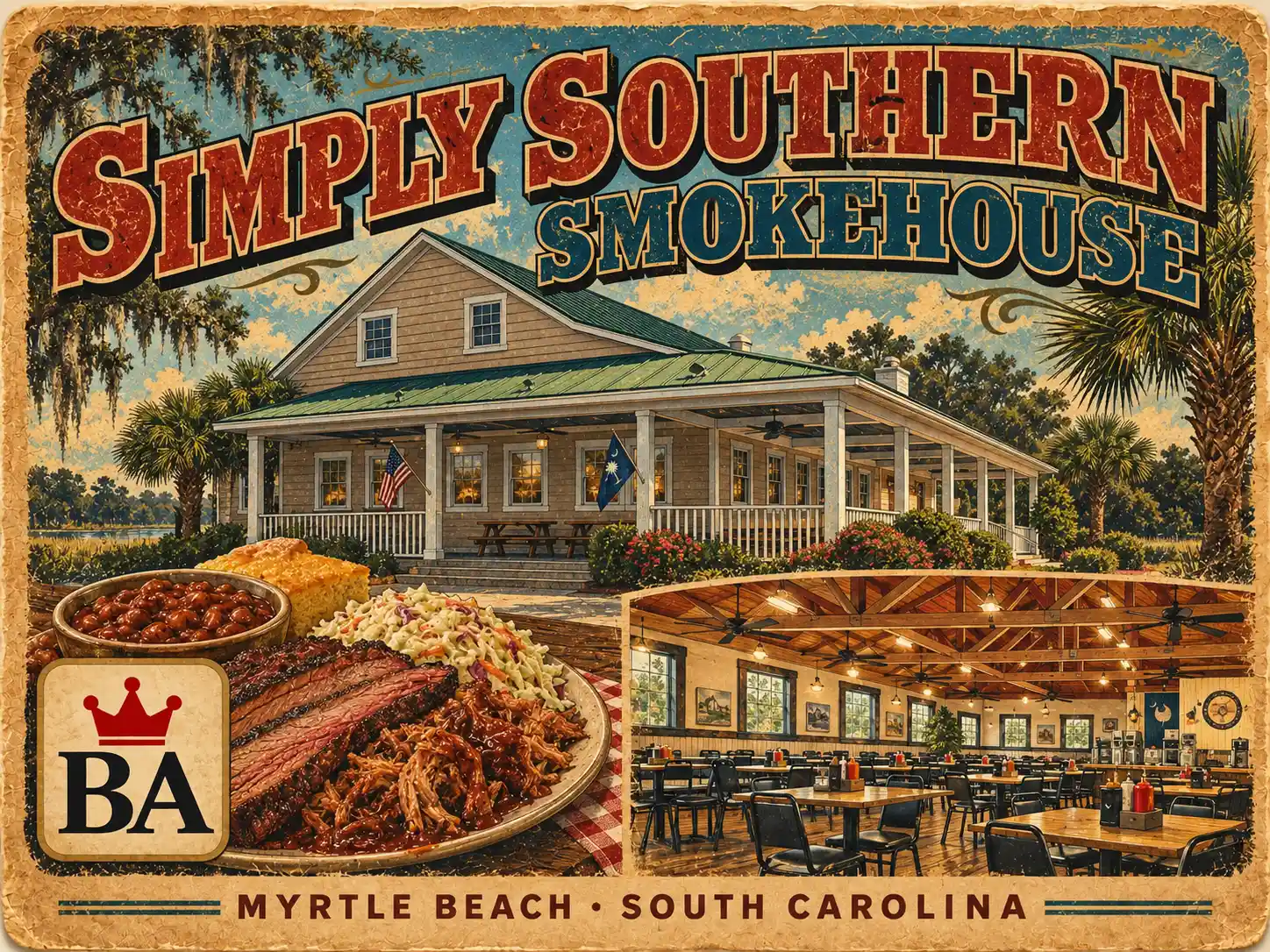
Simply Southern Smokehouse
Myrtle Beach,
South Carolina

Sea Captain’s House
Myrtle Beach,
South Carolina