
Cuisine
Meal Periods
Dining Format
Price Range
$22 - $37
Website
Cuisine
Meal Periods
Dining Format
Price Range
$22 - $37
Website
EXPERIENCE
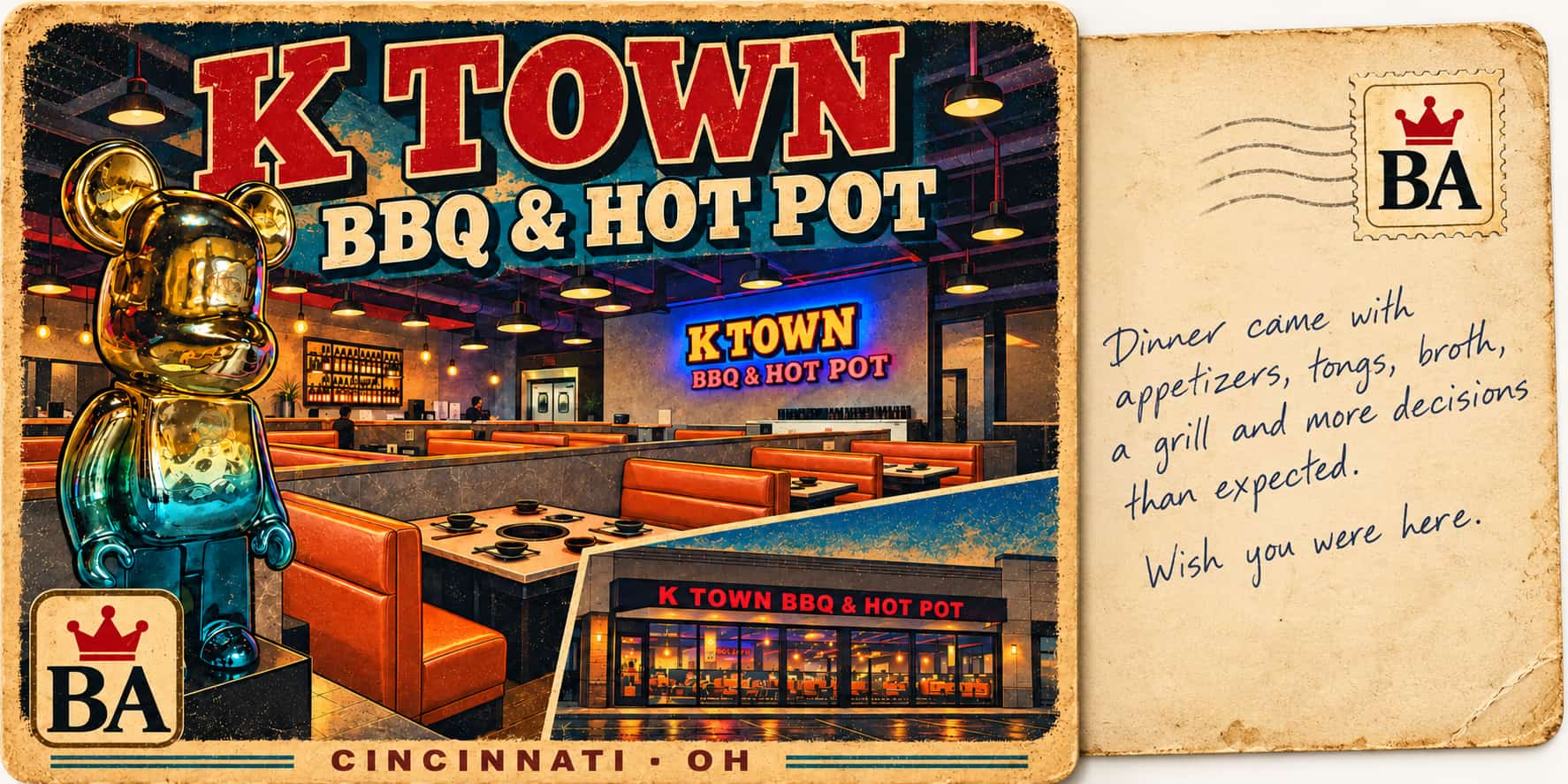
K Town BBQ & Hotpot takes two of the most hands-on forms of all-you-can-eat dining and lets them occupy the same table. Combo tables pair a Korean barbecue grill with individual hot-pot burners, so dinner can run on two tracks at once. Beef can be caramelizing over the grill while ribeye, mushrooms or noodles disappear into broth beside it. The equipment changes the meal into a small group cooking project.
The room matches that energy without becoming a theme park. Orange-brown booths, a dark open ceiling, bright circular fixtures and the illuminated K-Town sign give the dining room a contemporary feel. Built-in burners dominate the tabletops, while the sauce bar sits visibly along the wall. Before the first tray arrives, the room makes it clear that dinner here involves participation.
That participation rewards pacing. Guests choose hot pot, Korean barbecue or the combined format, then build the meal through repeated orders rather than one enormous first delivery. The grill needs attention, broth ingredients cook at different speeds, and the sauce and cold bars add another set of decisions. It is dining by participation: watch the meat, tend the broth, mix a sauce and decide what should come next.
K Town is most distinctive when both options are working together. The pleasure is not simply unlimited quantity; it is the contrast between charred, marinated meats and the slower progression of hot pot, with sauces and side dishes connecting the two. This is abundance as activity, a meal that stays social because something is almost always sizzling, simmering, dipping or being passed across the table.

FOOD
K Town’s food identity is built around the choice between Korean barbecue, hot pot or both, and the combined format makes the difference between the two styles especially clear. The grill side is about browning, rendered fat and marinades; the hot-pot side is about broth, timing and ingredients that change texture as they cook. Lunch opens a broad version of both menus, while dinner adds several premium cuts.
Beef gives the barbecue menu its clearest center of gravity. Beef Bulgogi and Spicy Beef Bulgogi bring thin marinated slices that cook quickly, while sliced beef belly and brisket keep the grill moving in short rounds. Dinner expands the range with KTown Short Rib, Finger Short Ribs, Angus Chuck Flap Tail and KTown Premium Steak. Those thicker cuts slow the pace and turn the grill into a shared centerpiece that needs to be watched and cut at the table.
Pork, chicken and seafood keep the barbecue from becoming a beef-only exercise. Garlic Pork Belly and Spicy Pork Bulgogi lead the richer meats, joined by Chicken Bulgogi, Garlic Chicken and Spicy Chicken Bulgogi. Cumin Lamb joins the dinner menu. The seafood list runs through garlic and spicy shrimp, calamari, fish fillet and dinner-only Spicy Salmon, while Cheese Corn gives the table a creamy pause between rounds.
Hot pot starts with an unusually broad broth decision. The menu offers Sechuan Spicy, Tomato, Japanese Miso, Kimchi, Thai Tom Yum, K Town Special, Bone Broth and a Healthy Herbs base with bean paste, red date and goji berry. Tomato and miso provide vegetarian starting points, while kimchi and tom yum push the pot toward sharper territory. Individual pots let one table pursue several broth directions at once.
The ingredient list then moves well beyond sliced meat. Pork belly, beef belly, lamb and chicken cover the familiar proteins, but tripe, black tripe, boneless duck feet, beef aorta, quail eggs, shrimp dumplings, fish roe balls and several seafood and meatballs broaden the hot-pot vocabulary. Seafood includes squid, swai, clams, mussels and shrimp. Fried tofu skin, bean-curd stick and Chinese doughnut are particularly useful for absorbing broth.
Vegetables and noodles make the pot easier to pace. Crown daisy, watercress, bok choy, lotus root, napa, bamboo shoot and several mushrooms can be added gradually, while vermicelli, udon, ramen, rice cake, sweet-potato noodle and flat noodle make sense later, after the broth has gathered flavor. The sauce bar bridges both cooking systems, and the nearby cold station adds side dishes such as kimchi and seaweed salad as resets against richer grilled foods.
The appetizer list provides a lesser-seen extra in hot pot dining. Korean Popcorn Chicken, Korean Fried Chicken, fried pork dumplings, spring rolls, takoyaki and crab rangoon provide ready-to-eat bites while raw ingredients cook. The better strategy is not to make the starters a first meal of their own. K Town rewards contrast: short rib from the grill, something leafy from the broth, a sauce, then another round. With both hot pot and barbecue active, variety comes from letting the table keep changing course.
FOOD HIGHLIGHTS
♛ KTown Short Rib — dinner-only beef cut built for deliberate grilling and sharing.
♛ KTown Premium Steak — a thicker dinner cut that gives the grill a centerpiece.
♛ Beef Bulgogi — thin marinated beef made for quick caramelization over the grill.
♛ Garlic Pork Belly — rich pork belly driven by a garlic-forward marinade.
♛ Cumin Lamb — dinner-only lamb that takes the barbecue in an aromatic direction.
♛ Spicy Calamari — marinated seafood that brings heat to the grill.
♛ K Town Special Broth — the house-named option among eight hot-pot bases.
♛ Kimchi Broth — fermented-chili character for meat, mushrooms and noodles.
♛ Sliced Ribeye — dinner-only hot-pot beef that cooks in seconds.
♛ Shrimp Dumplings — seafood-filled dumplings that add substance to the broth.
♛ Lotus Root — crisp slices that keep structure through a simmer.
♛ Sauce Bar — a deep self-mix station linking barbecue and hot pot.
LATEST FROM THE WIRE

September 6, 2026
Mandarin Brings Back Its Moon Festival Buffet September 8
New Duck Bao joins returning seasonal favorites during the Ontario chain’s fall tradition.

September 5, 2026
Uno Pizzeria Joins the AYCE Ranks With $14.99 Bottomless Deep Dish
The 10-week promotion starts today at 21 restaurants after Uno’s $99 Pizza Pass sold out.

NEWEST RESTAURANT PROFILES
The Original Benjamin’s Calabash Seafood
Myrtle Beach,
South Carolina
Sunny Side Up Grill
Little River,
South Carolina
Simply Southern Smokehouse
Myrtle Beach,
South Carolina

Sea Captain’s House
Myrtle Beach,
South Carolina