
Cuisine
Meal Periods
Dining Format
Price Range
$16 - $23
Website
Cuisine
Meal Periods
Dining Format
Price Range
$16 - $23
Website
EXPERIENCE
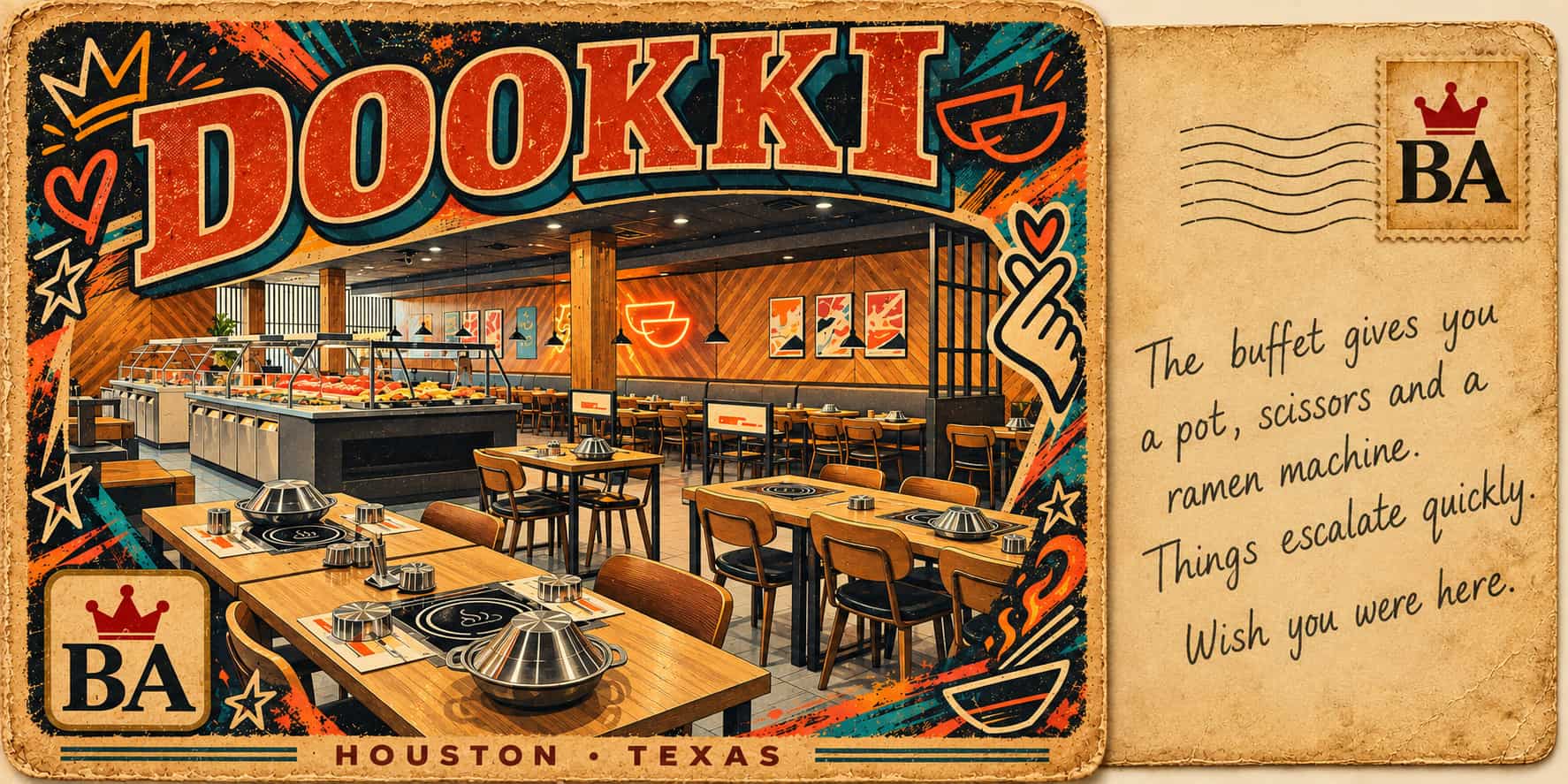
Dookki turns a buffet meal into a social cooking event in immersive surroundings. Houston’s location was the Korean chain’s first U.S. outpost, but the room feels more playful than corporate: herringbone wood, dark ceilings, black pendant lights, orange wayfinding and bright ingredient islands give the space cheerful, contemporary street-food energy. Every table has an induction burner, so the visual center of the meal is a wide silver pan steadily changing in front of the group.
The first trip through the stations is partly about learning the system. A server starts the table with broth and explains the vessels: a small handled cup for sauce, a larger bowl for gathering tteok, noodles, vegetables and proteins, and another handled bowl for serving. Table cards reinforce the sequence. Sauce goes into the broth first, then the ingredients, and the pot bubbles down. It resembles hot pot at a glance, but the goal is different: the liquid reduces into a thick, clingy sauce rather than remaining a soup to sip.
While the tteokbokki cooks, the ready-to-eat counter supplies fried chicken, dumplings, gimmari and other Korean snacks, and the automatic ramyeon station offers a separate instant-noodle diversion. Staff are accustomed to guiding first-timers, and scissors and heat-safe grips make the tabletop cooking easier. The 90-minute format rewards pacing because the main pot can become filling before the meal has finished revealing itself.
The second act explains the name: Dookki means “two meals.” Instead of abandoning the concentrated sauce left in the pan, the table turns it into fried rice with rice, kimchi and mix-ins, then flattens it against the hot metal so the bottom can crisp. The meal does not simply continue with another plate; it changes form. That progression, shared cooking and constant decisions make Dookki especially suited to friends who want dinner to be something they do together.

FOOD
Tteokbokki is the center of Dookki, and understanding the dish explains why this buffet feels so different. Tteok are Korean rice cakes: dense, springy, pleasantly chewy pieces made to absorb sauce rather than the sweet “cake” the English name might suggest. Traditional tteokbokki is Korean street food built around those cakes, usually with fish cake and a sweet-spicy red sauce. Dookki expands that snack into an AYCE format, letting the table choose the sauce, the tteok, the noodles and the supporting ingredients.
The sauce bar is the first major decision. Dookki’s house base gives the familiar sweet-spicy foundation, Dongdaemoon pushes the heat much harder, Busan leans sweet and spicy, and rosé softens the profile with creaminess. The pleasure is in blending. As the mixture boils, starch from the rice cakes and noodles helps the liquid tighten until it coats everything in the pan. Tteokbokki should finish saucy and glossy, not as a bowl of clear hot-pot broth.
The ingredient bar makes texture as important as heat. Rice tteok can be round or cylindrical, while wheat-based tteok brings a slightly different chew; sweet-potato and cheese-centered versions add still more variation. Fish cake, or eomuk, adds a savory, bouncy counterpoint and readily drinks in the sauce. Noodles, fried tofu, cabbage, mini sausages, meatballs, shrimp and fish balls let a table push its pan toward vegetables, seafood, starch or pure snack-food abundance.
The fried-food counter is not merely something to eat while waiting. Gimmari – crisp seaweed rolls wrapped around seasoned glass noodles – are a classic tteokbokki companion because their brittle exterior softens at the edges when dipped into the red sauce. Fried dumplings work the same way. Fried sweet potato brings sweetness against the chile, while Korean fried chicken provides a substantial ready-to-eat anchor. Gimbap, bulgogi and japchae broaden the spread beyond the communal pot.
Then there is the ramyeon station. This is deliberately instant Korean ramyeon rather than a restaurant ramen kitchen: choose a packaged noodle and use the automatic cooker. It is easy to confuse that station with the noodles that can go into the tteokbokki pan, but they are two different paths. One enriches the shared sauce pot; the other becomes its own steaming bowl. At a restaurant already centered on rice cakes, the extra noodle option is almost comically carb-forward, which is part of the fun.
The smartest part of the meal arrives after the tteokbokki. Leave a shallow layer of concentrated sauce in the pan, then add rice and fried-rice mix-ins. Kimchi is the key, joined by combinations of sweet corn, onion, ham and seaweed. Stir everything through the sauce, increase the heat and spread the rice into a thin layer. Letting it sit long enough to brown creates the crisp bottom that turns the remains of the first course into a second dish with an entirely different texture.
Ice cream waits at the end, but Dookki’s real pleasure is the sequence itself. The meal starts with raw choices and instructions, moves through bubbling tteokbokki and fried snacks, detours into ramyeon if appetite allows, then deliberately converts its own sauce into fried rice. It is less a conventional buffet than an edible set of instructions, with enough flexibility inside the framework to make each table’s version a little different.
FOOD HIGHLIGHTS
♛ Rice Tteok — springy Korean rice cakes built to absorb the sauce.
♛ Wheat Tteok — a chewier variation with a distinctly different bite.
♛ Dookki Sauce Blend — sweet-spicy house flavor customized at the sauce bar.
♛ Rosé Tteokbokki — creamy sauce that softens the chile without losing character.
♛ Fish Cake — savory eomuk that soaks up the thickened tteokbokki sauce.
♛ Gimmari — crisp seaweed-and-glass-noodle rolls made for dipping.
♛ Korean Fried Chicken — a hearty ready-to-eat counterpoint to the communal pot.
♛ Bulgogi — sweet-savory Korean beef from the prepared-food side of the buffet.
♛ Japchae — glossy glass noodles with vegetables and gentle sweet-savory seasoning.
♛ Gimbap — compact seaweed rice rolls for a cool break between hot dishes.
♛ Instant Ramyeon — packaged Korean noodles cooked in the automatic ramen machine.
♛ Kimchi Fried Rice — the crisp-bottomed second meal made from the remaining sauce.
LATEST FROM THE WIRE
September 6, 2026
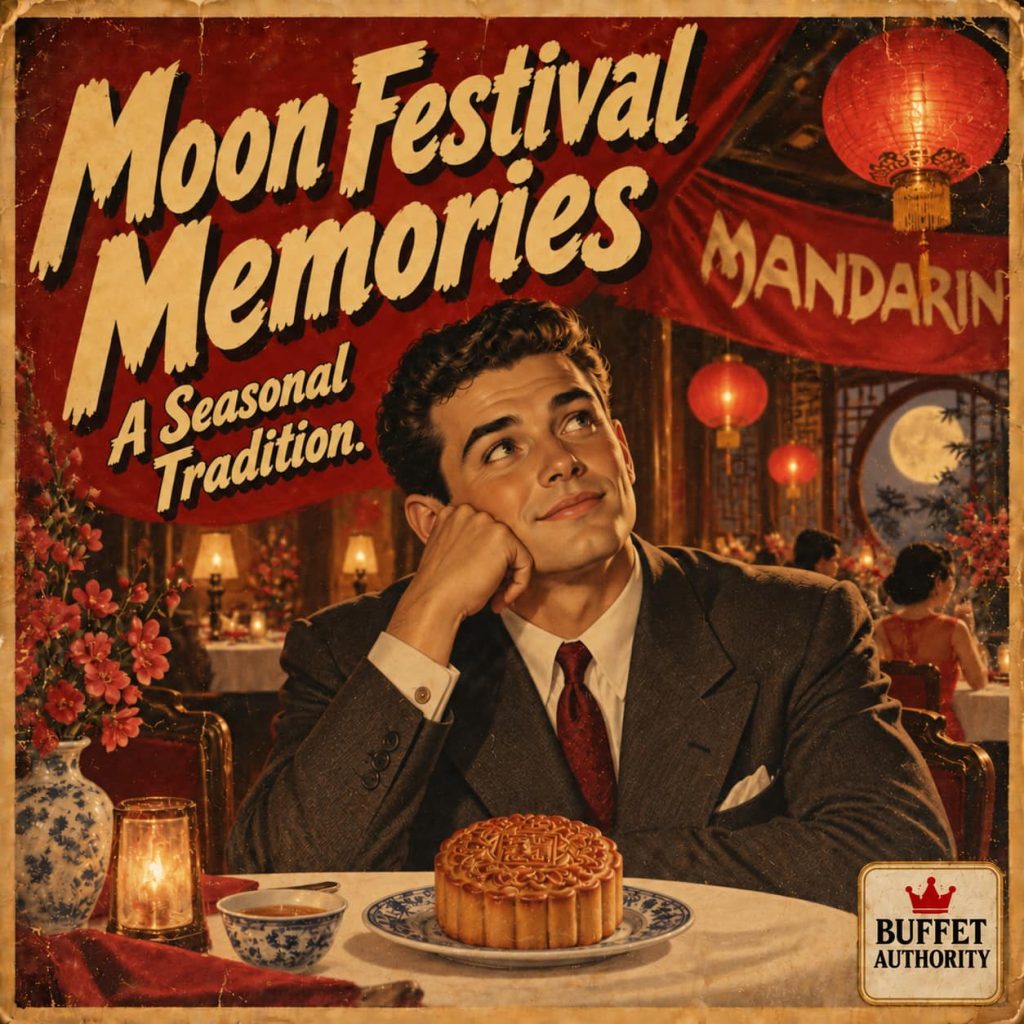
Mandarin Brings Back Its Moon Festival Buffet September 8
New Duck Bao joins returning seasonal favorites during the Ontario chain’s fall tradition.

September 5, 2026
Uno Pizzeria Joins the AYCE Ranks With $14.99 Bottomless Deep Dish
The 10-week promotion starts today at 21 restaurants after Uno’s $99 Pizza Pass sold out.

NEWEST RESTAURANT PROFILES
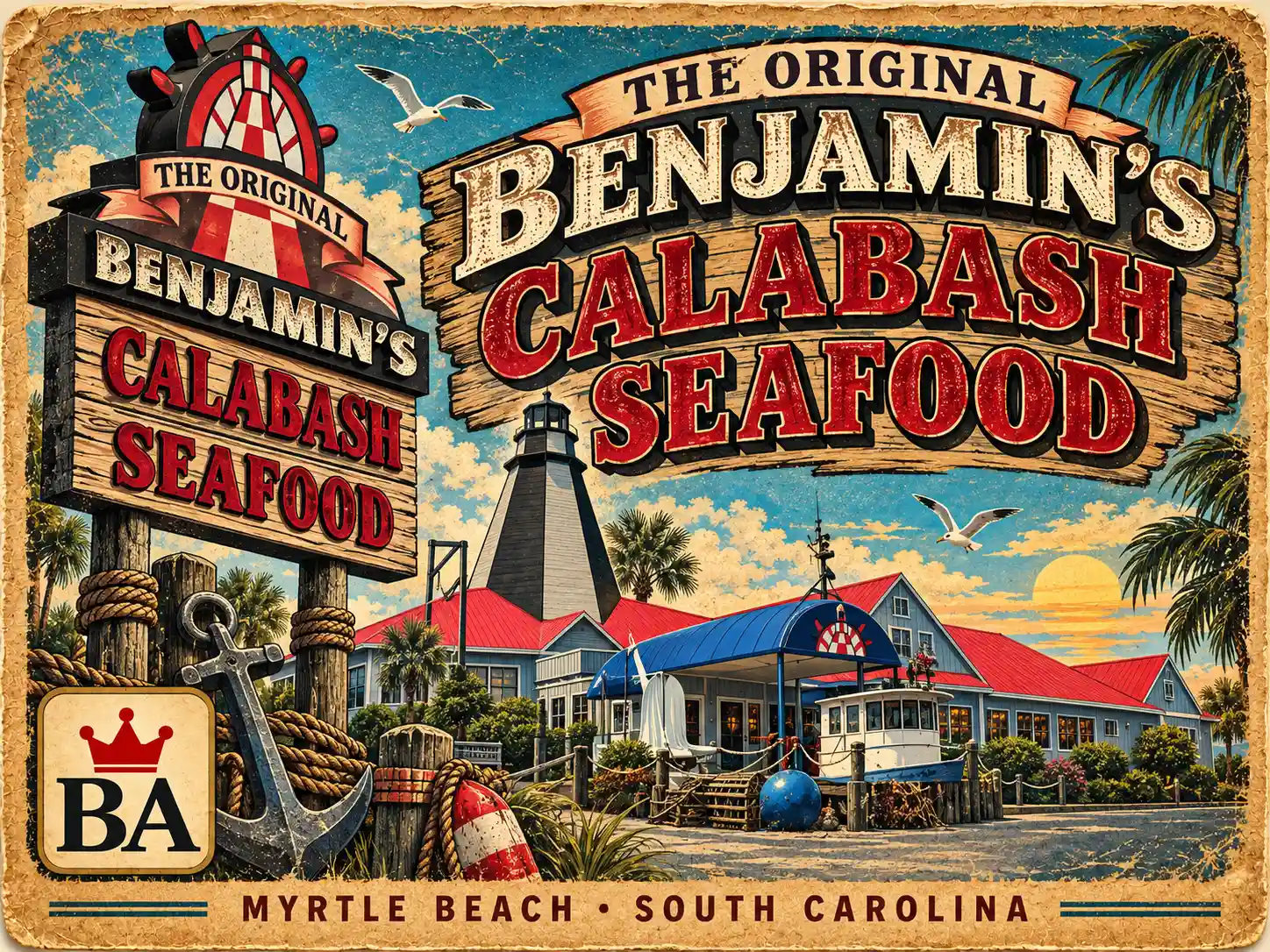
The Original Benjamin’s Calabash Seafood
Myrtle Beach,
South Carolina
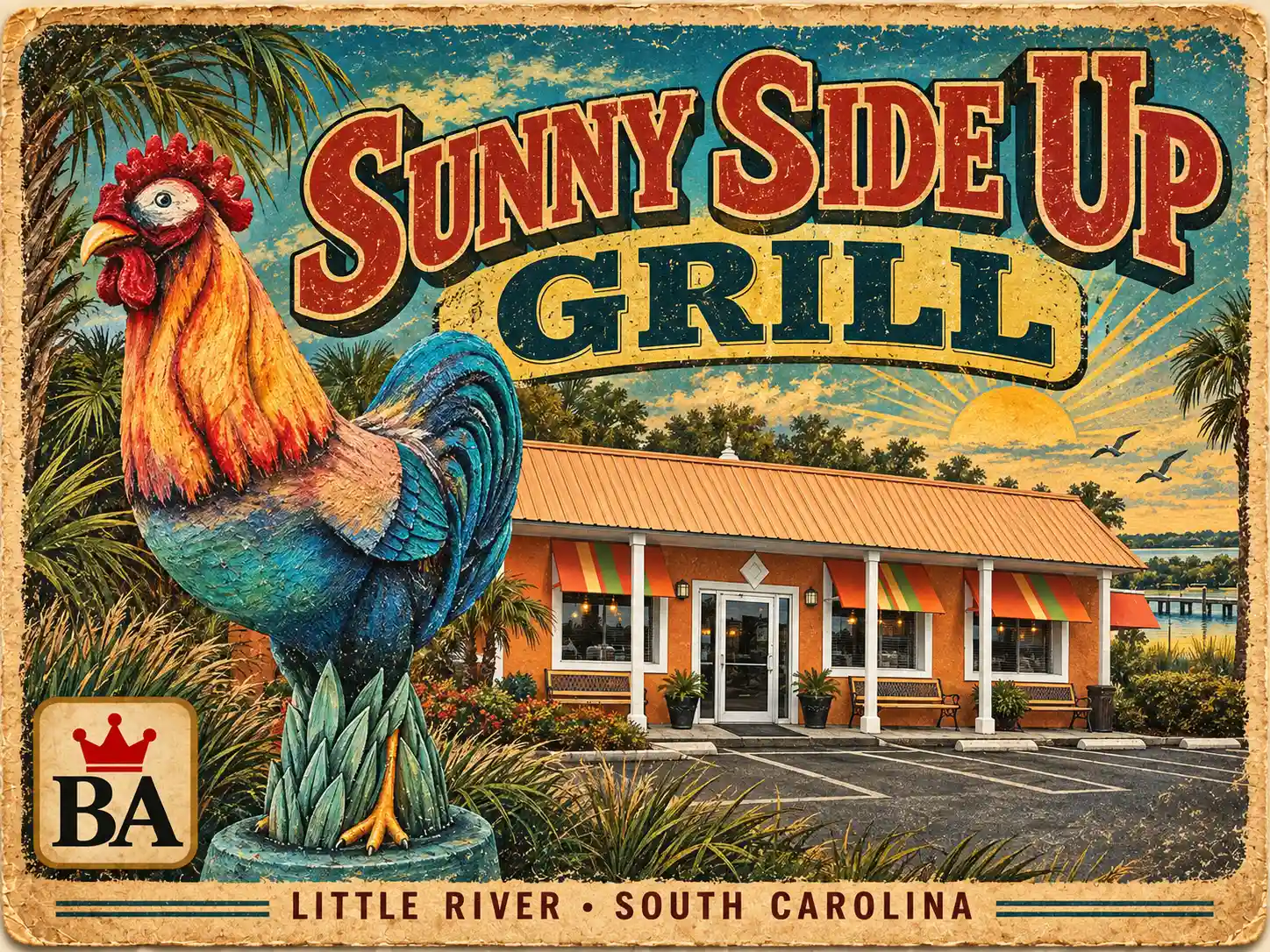
Sunny Side Up Grill
Little River,
South Carolina
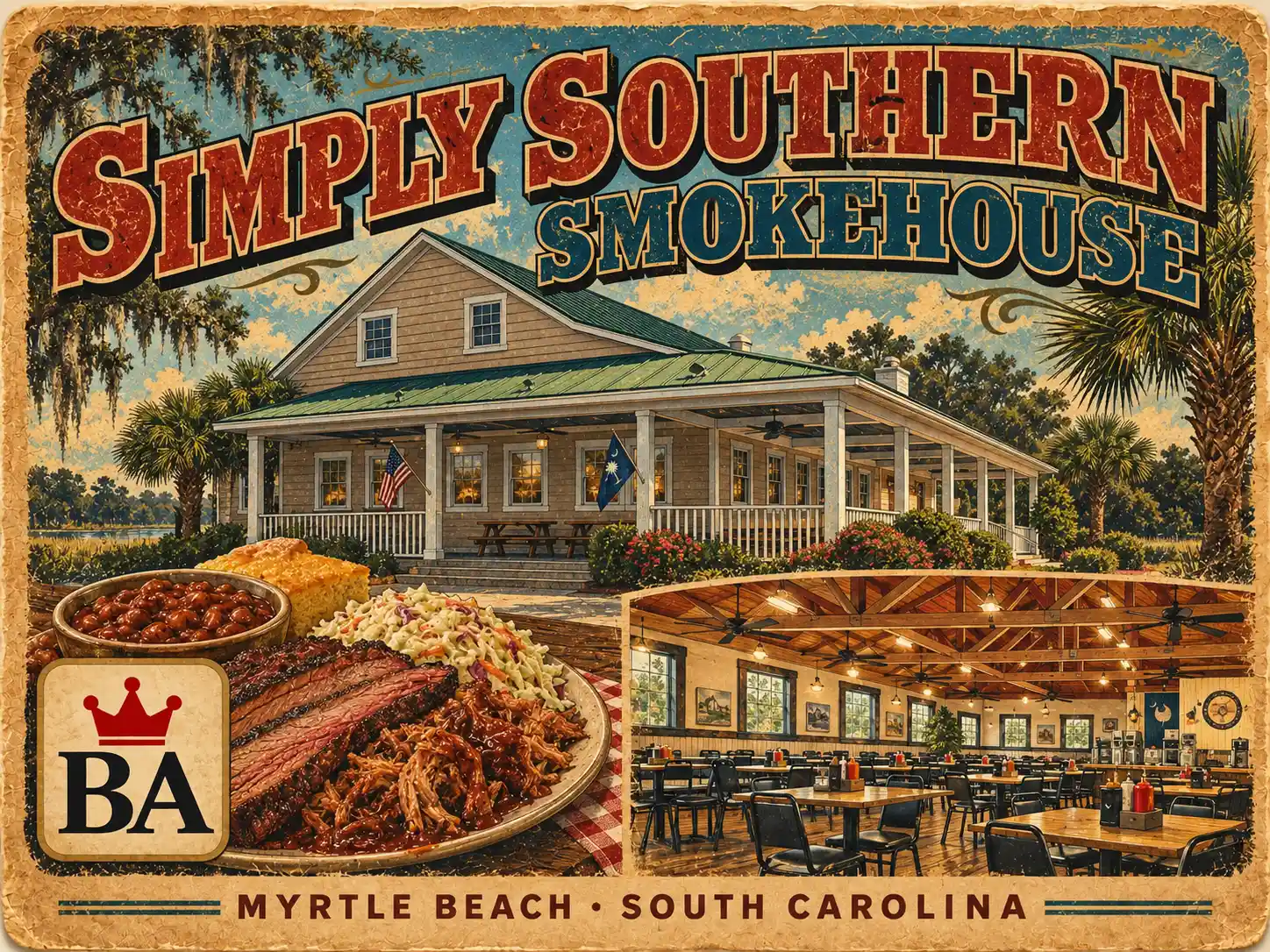
Simply Southern Smokehouse
Myrtle Beach,
South Carolina

Sea Captain’s House
Myrtle Beach,
South Carolina