There is a lot of arithmetic hiding behind an unlimited plate.
New reporting from The Wall Street Journal offers an unusually detailed look at how Golden Corral tries to make all-you-can-eat economics work while food costs remain high. The operating model depends on a combination of traffic, menu engineering, lower labor requirements, beverage sales and remarkably close control over how much food reaches the buffet at any given moment.
Food alone accounts for about 38% of Golden Corral’s sales, according to the report, a level higher than at many conventional restaurants. The buffet partially offsets that burden with a service model that requires fewer servers, but the company still has to keep the expensive part of abundance — food that gets cooked but never eaten — on a short leash.
Fifteen Minutes at a Time
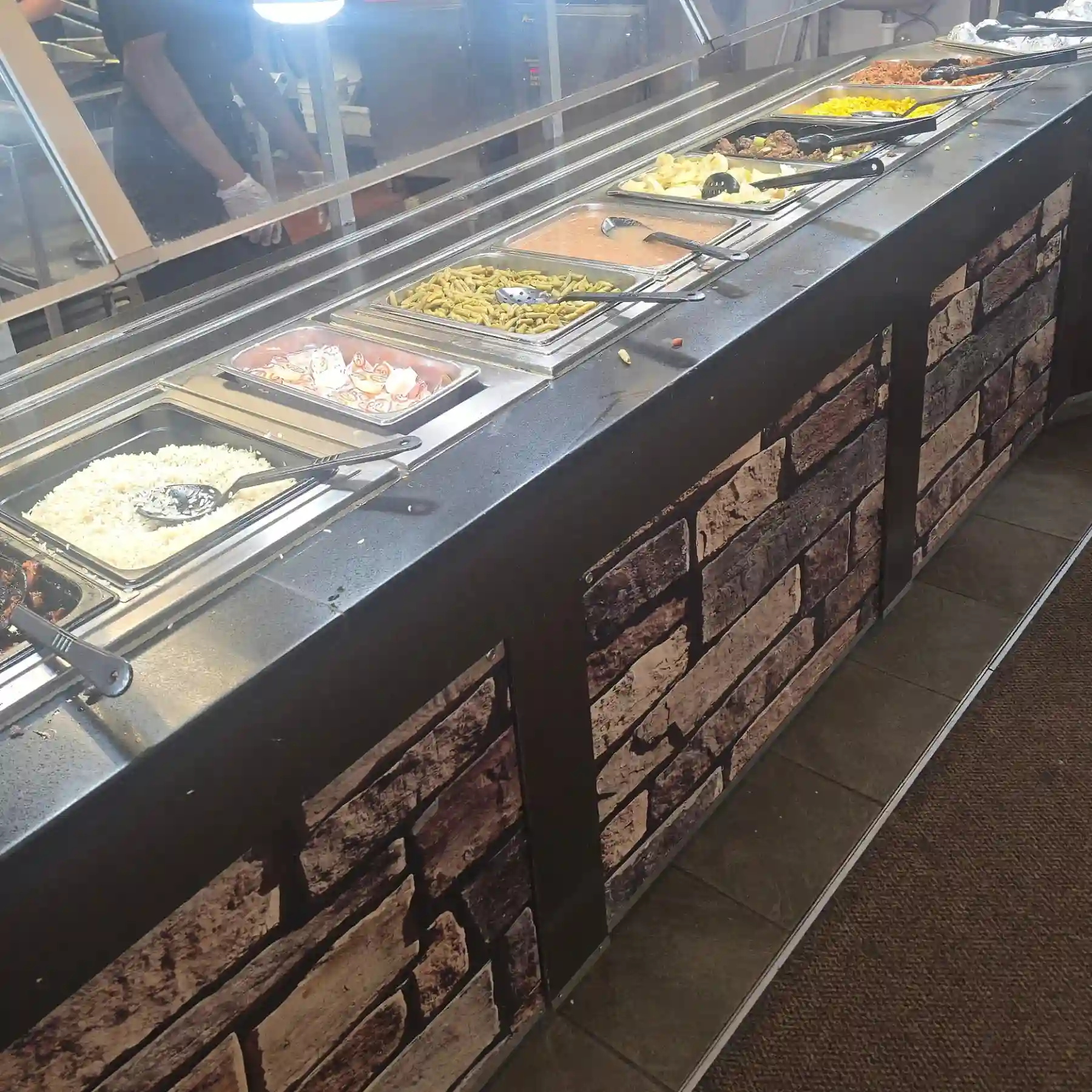
Golden Corral operators use demand information to forecast production in 15-minute increments. Rather than filling pans far ahead of expected traffic, the objective is to keep food moving through the line while it is still fresh and to avoid producing more than the dining room is likely to consume.
About 80% of the food is prepared in-house, according to the reporting, and an average buffet carries roughly 150 items. That scale makes the mix important. When beef prices rise, the answer is not simply to remove steak from a buffet built partly around the promise of steak. Golden Corral has instead added alternatives such as a whole bone-in fried pork chop that costs the company roughly 40% as much as a comparable serving of sirloin.
The same logic appears across the line. Expensive proteins are presented alongside lower-cost sides, breads, vegetables and starches. Drinks help as well: refillable beverages are sold separately at many locations, adding revenue without adding another pass through the steak station. The whole system is designed around a simple truth familiar to anyone who has ever surveyed a buffet before committing plate space: unlimited choice does not mean diners consume unlimited quantities of every expensive item.
Why AYCE Is Spreading Again
The Golden Corral story lands during a broader resurgence in all-you-can-eat promotions. Technomic data cited by the Journal counted roughly 150 AYCE deals among major restaurant chains during the first half of 2026 — about four times the number in the same period of 2021. Only about 13% of casual-dining operators offered an AYCE option, but 53% of surveyed consumers expressed interest in one.
That gap helps explain why chains continue returning to unlimited offers even when the economics are unforgiving. Diners understand the value proposition immediately, particularly when restaurant prices have risen elsewhere. For operators, the challenge is making the promise feel generous while keeping the actual cost of delivering it predictable.
Golden Corral has been working on that balance since it evolved from a family steakhouse into its large Buffet & Grill format in the 1980s. The pans may look abundant. Behind them, apparently, someone is thinking about the next 15 minutes.