Long Island’s next all-you-can-eat sushi restaurant is arriving with a little more machinery than the usual opening announcement.
Shinjuku Station Revolving Sushi Bar has leased a freestanding 5,800-square-foot former T-Mobile at 1230 Corporate Drive in Westbury’s Roosevelt Raceway Center, where it hopes to open its first Long Island location by the end of November. The address is local news. The service model is the more interesting part.
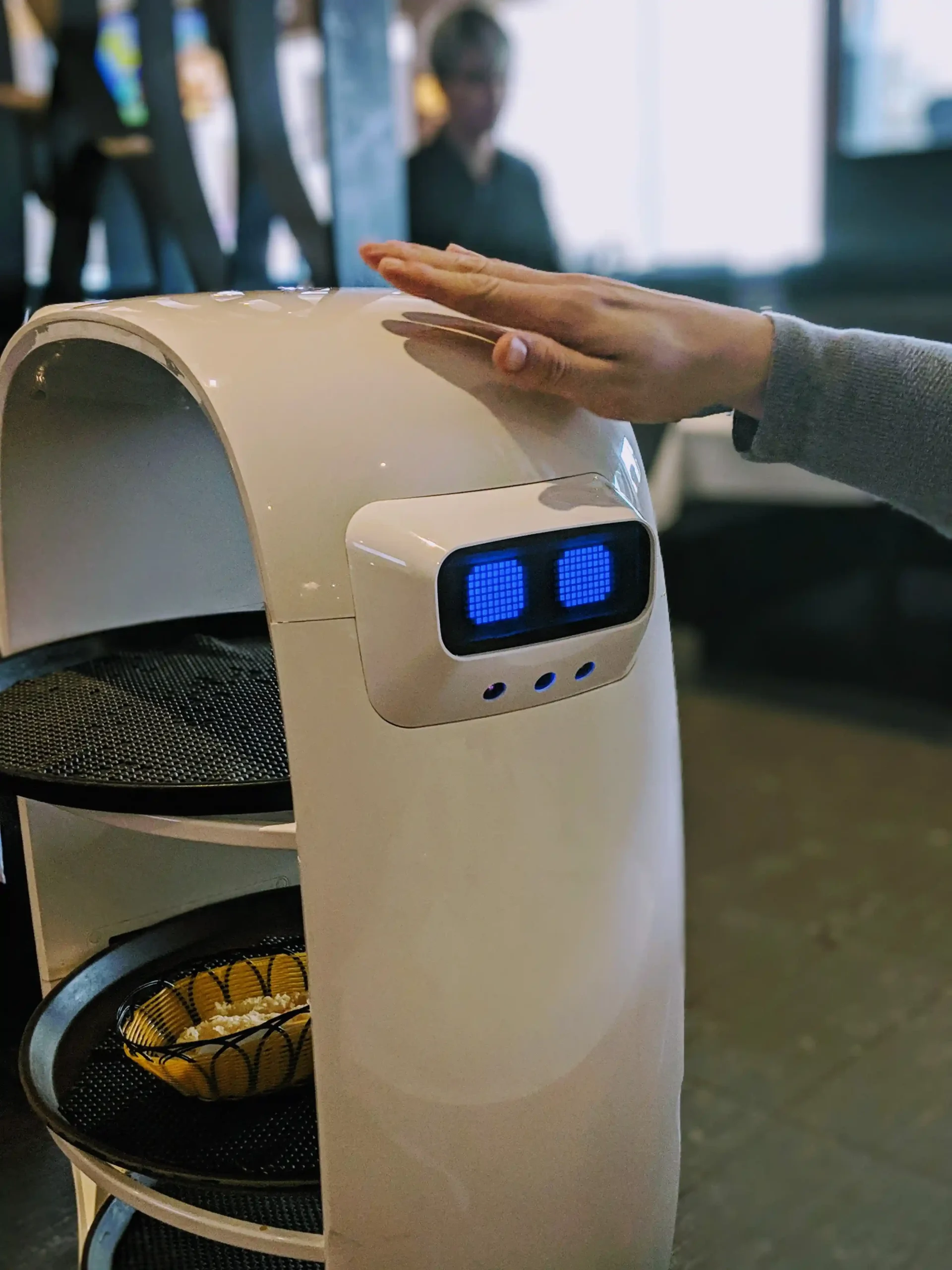
At Shinjuku, guests can take sushi as it passes on a revolving belt, then use a tablet at the table to order dishes that are prepared in the kitchen. Smaller custom orders travel directly to the table on miniature bullet trains. Orders too large for the train can arrive aboard roughly 4 1/2-foot service robots. The belt itself is monitored by chips that track how long a plate has circulated; local reporting says dishes are removed after 45 minutes.
The result sits somewhere between a buffet, a sushi bar and an automated delivery network. The food is unlimited, but much of the meal can be requested without leaving the table or waiting for a server to take another round. In a format built around the words “another round,” that is not a small change.
Westbury’s menu is expected to include more than 50 classic and specialty rolls along with appetizers, hibachi, teriyaki, poke, ramen, yakisoba and other cooked dishes. Pricing for the new location has not been announced. Long Island already knows revolving sushi through Kura Sushi locations in Carle Place and Lake Grove, but Kura charges by the plate. Shinjuku’s distinction is combining the moving-belt experience with a flat-price AYCE format.
That combination is part of a broader technological evolution in tableside abundance dining. Conveyor sushi itself is decades old, and Kura has spent years demonstrating how far the model can be taken in the United States. Kura reported 91 U.S. restaurants at the end of May 2026 and opened three more shortly afterward. Its restaurants pair revolving belts with touchscreen ordering, an express belt for made-to-order dishes and robot drink delivery. In regulatory filings, the company describes those systems not merely as theater but as operating tools that reduce front-of-house labor needs and generate data about ordering and food consumption.
AYCE software is becoming more specialized, too. Restaurant technology vendors now market table-ordering systems specifically for unlimited dining, with controls for dining time, the number of items that can be ordered in a round and the interval between rounds. Chowbus promotes similar controls for buffet and AYCE restaurants, including tablet and QR ordering. In other words, the technology is beginning to understand the peculiar mathematics of unlimited dining: one price, repeated orders, controlled pacing and a kitchen that needs to know when the next wave is coming.
Restaurants are putting those tools into practice in several forms. I CAN BBQ, an all-you-can-eat Korean barbecue group in Southern California, advertises robotic servers that bring additional rounds to the table. Manhattan’s Kaiten Zushi has offered AYCE conveyor-belt sushi since 2023 and features a service robot in its restaurant. In the Rochester, New York, area, Spin & Savor and Fuji Sushi Station both pair all-you-can-eat options with conveyor or rotary sushi service. The examples are still scattered rather than uniform, but they point in the same direction: unlimited dining is increasingly being designed around tableside ordering and mechanized delivery rather than a single central buffet line.
There is a practical reason the technology fits. Traditional buffets give diners direct control over pace and variety because they simply get up and serve themselves. Tableside AYCE sushi, Korean barbecue and hot pot preserve the unlimited premise while asking the kitchen to prepare repeated small rounds. Tablets can restore some of that old buffet autonomy: order when ready, see the menu continuously and send the next round without first finding a server. Rails and robots then address the other half of the equation by moving more of those dishes from kitchen to table.
Shinjuku Station has grown quickly around that formula. Its first restaurant opened in High Point, North Carolina, in January 2025. By September 2026, local reporting identified additional operating locations in Winston-Salem, North Carolina; South Plainfield, New Jersey; and Harrisburg, Pennsylvania. NJBIZ reported in June that 17 more locations were in development, while the company’s current location directory stretches into New York, New Jersey, North Carolina, Pennsylvania, Connecticut, Massachusetts, Texas, California and Utah.
That makes Westbury more useful as a window than as an isolated opening. The emerging model is not a restaurant without people. Human hosts, cooks and servers remain part of the experience. What is changing is the path between appetite and the next plate: the guest increasingly controls the pace on a screen, the kitchen receives the order digitally, and a belt, train or robot handles part of the trip back to the table. The classic buffet asked diners to go to the abundance. A growing corner of tableside AYCE is trying to bring the abundance to them.